Welcome!

We make apps for touchscreen Apple devices.

So if you have…

then you can read our storybooks.

Our first app is called ‘The Artifacts’, released 2011.

Watch our promo video on YouTube to see the app in use.

Here it is in the iTunes store.


We hope you enjoy reading The Artifacts. We loved making it!


Our next story is on the way…


Close Reading: Bringing reader and text closer together

First up, Larry Ferlazzo has a great list

Does Background Knowledge Matter to Reading Comprehension? from Russ On Reading

What, exactly is close reading of the text? from Grant Wiggins. Part two is here.

The first chapter of the book Notice and Note by Beers and Probst (2013), which you can buy here. I found the following portion especially interesting, and I wonder how prevalent this attitude is among teachers of English literature, not just in America but around the world:

is-reading-still-reading


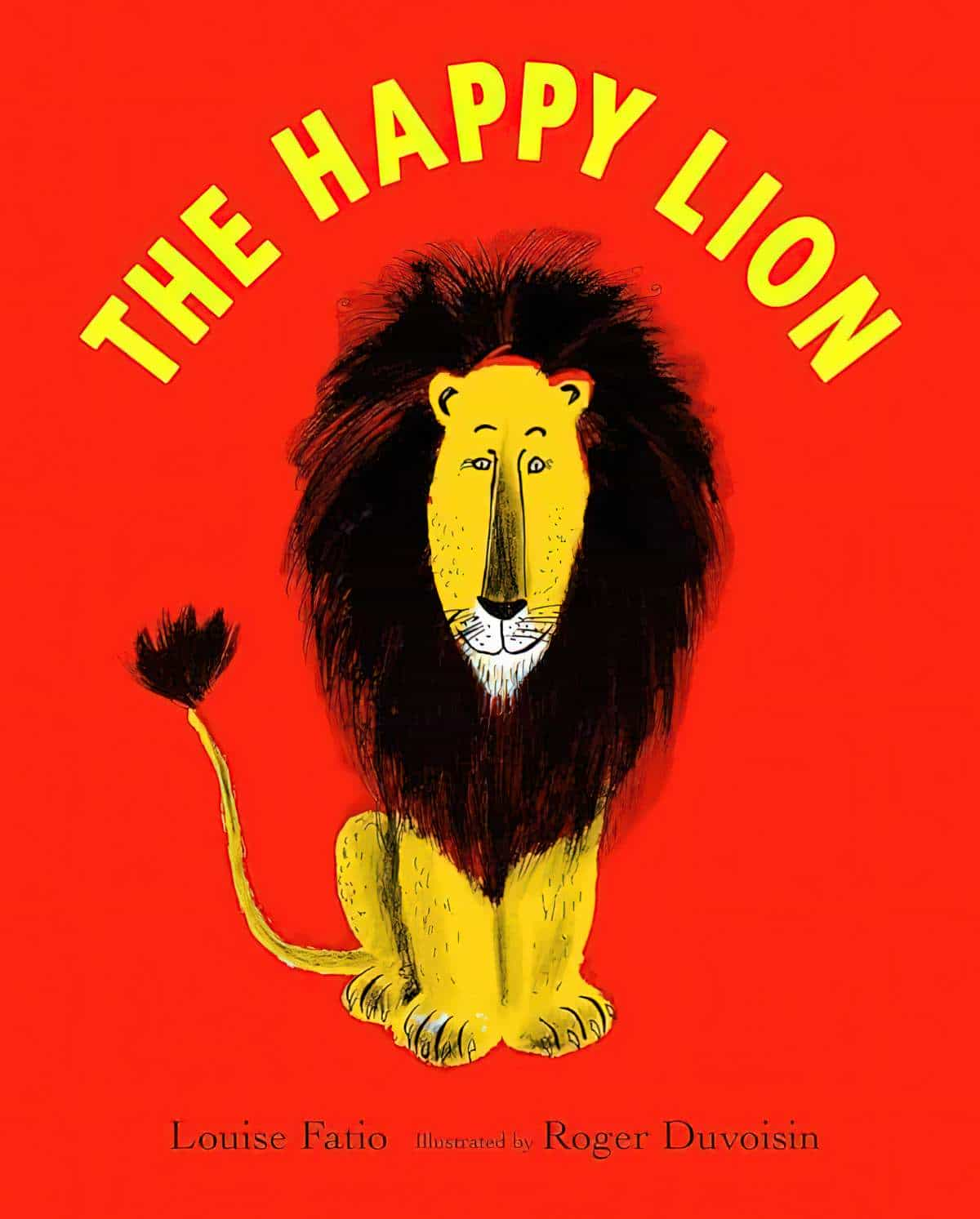
Designing Covers

I’m always interested in learning about design from the professionals.

Here’s Tom Forget talking about the design of young adult book covers. And here are some key points:

  • Designers of YA covers are less likely to use images that are cropped or obscured than what you might see on adult covers.
  • YA covers are not as abstract as adult covers. (“Don’t outsmart” the readers.)
  • Trends are more important when it comes to the younger audience. Less so for adults.
  • Don’t fall head over heels with your work because it may not be right. Which means you’ll have to scrap it.


Never Work With Animals And Children

Here’s me trying to get a four-year-old to say, ‘I love eggs!’

I Love Eggs Audio File


Things Possible With Digital Stories Which Are Not So Possible With Paper Stories

1. ALTERNATIVE ENDINGS

I know from book club that endings pose a particular challenge for authors, none of whom can satisfy all readers. But with eBooks, technically, it’s possible to offer a few different endings. Whichever one the reader gets might be based on a few simple questions at the very beginning of the book, such as, ‘Do you have a high tolerance for ambiguity?’ or ‘Are you a fan of happy endings?’ or something like that. Or the reader might simply be asked, ‘Do you want the happy ending or the tragic ending?’

I also know from reading The Girl With The Dragon Tattoo that many books in trilogies might well have more satisfying endings if they were standalone books. I feel that Stieg Larsson’s novel would have been far better had it ended about 30 pages in. Of course, it was necessary for him to go on and set up the story for the next book in the trilogy, which I haven’t read. I knew by then that I wouldn’t bother reading it, either. So I would’ve liked the option, at about page 300, to check a box: ‘Do you think you’ll read the next book in this trilogy? Your decision will affect the ending point of this story.’ I really didn’t need to read the final 30 pages, so that question would’ve saved me some time.

A more recent example is The Hunger Games. I saw that film with my husband at the theatre. He knew absolutely nothing about it. After the film, he expressed disappointment in the ending. It was only after I told him that it was the first of a trilogy that the reason for its ending became clear. So I’d argue that The Hunger Games is another story in which the ending would be different (and more satisfying) if it were not the first of a series.

I can’t see publishers ever embracing the option to encourage readers not to read every single book in a series — publishers are making most of their money from series after all — but I write now of pie-in-the-sky possibilities afforded by the electronic age.

I’m kind of tired of series anyway. I know I’m not the only one.

2. MULTIPLE RATINGS IN THE ONE STORY

This is something we’re exploring in our next app, and is definitely something which might be more widely implemented if time and money were no object.

After realising that our three-year-old had remembered one of the more scary pages in our first app, and that she was requesting this page before bedtime, I worried that she might start waking from nightmares. As it happened, she didn’t, but at the time I had been mulling over whether a certain scene in our next story was perhaps too scary for the more tender individuals in our target readership.

The scene in question is a big, black hand which comes in through a bedroom window and grabs the protagonist as she lies in bed.

I was playing around with aforementioned toddler some months ago — she sometimes sits on my lap at the computer. I use my drawing software to create a picture directed by her. I must have been feeling mischievous and took some poetic licence because I not only drew the toddler in her bed, but also a monster coming out of the tree outside and in through the window, looking at her with its big googly eyes.

I regretted that one. It was only a few weeks later that I admitted to my husband what had caused all the night-time wakings.

But I also know kids who love, love, love to be scared by books. Maurice Sendak has recently expressed regret that there are not more modern scary stories around for children.

I’m inclined to agree with him. Nana gave the toddler a pop-up version of There Was An Old Lady Who Swallowed a Fly for Christmas last year. I remember my own childhood copy of this book: she definitely died. Its abrupt ending was the fun of it: ‘There was an old lady who swallowed a horse. She died of course.’ But this new, brightly coloured, sanitised version of the song ends with the old lady in hospital, only to have all the animals excised via surgery. In a remarkable slap-in-the-face to physics and biology, they all live happily ever after. (Okay, I probably shouldn’t get started on the realism of that plot, but still.)

It’s also a sad truth that some children do not cope well with scariness in stories because their lives are just not stable and safe enough. Perhaps this is truer now than it ever was.

An ebook or storybook app can get around the varying needs of children by allowing a ‘level of scariness’ set by user choice. In our case, we are making a button in our next app which allows the user to tip ‘scary sauce’ onto some chips in the main menu. Activation of this setting will allow the user access to the elements which I worry may limit (or terrorise) our audience. It will be interesting to see how this experiment goes, because I suspect the vast majority of children would naturally choose the scary version regardless of their own tolerance for such things. No one likes to feel as if they’re missing out. But I’m also working on the assumption that, since iPads are still expensive pieces of plastic, children are using gadgets under parental supervision.


Talk of ‘Babysitting’

Good apps or games should facilitate conversation between parents and children during this play, not get in the way of it.

- from a study from the Children’s Media Center at Georgetown University, summarised here.

But I don’t really buy the idea that gadgets can babysit. Kids need attention, and they demand it.

This chair sums it up perfectly.

chair

It’s called The Abooba Chair. Someone without kids — or else someone with an amazing tune-out ability — designed it to allow parents to read while their children play.

Bwahahahahahahaha


Technophobia

Drew’s Website Here. He posts comics daily.


Using iPads In The Classroom


Creative Block?

Don Draper’s advice to Peggy Olsen in Mad Men was to think about it hard for a really long time, then don’t think about it at all. I’m pretty sure the creator of Don Draper didn’t come up with that — I suspect it’s what all creative people learn sooner or later.

For those of us working with graphics, here is some more advice, tailored to the visual medium. I think it applies to illustration as much as to design.

How To Get Unstuck, from Eric Paul Snowden


The Giggle

Working on SFX for Midnight Feast. Here is some genuine, unedited giggling from our four-year-old.

HannahLaugh


Kidlit: difficult to pin down

Children’s literature is a place of great experimentation. Like children themselves, it can be hilariously playful and deeply serious. It isn’t content to sit on shelves and behave. It is inquisitive, exploratory – and difficult to categorise.

- David Almond, in The Telegraph