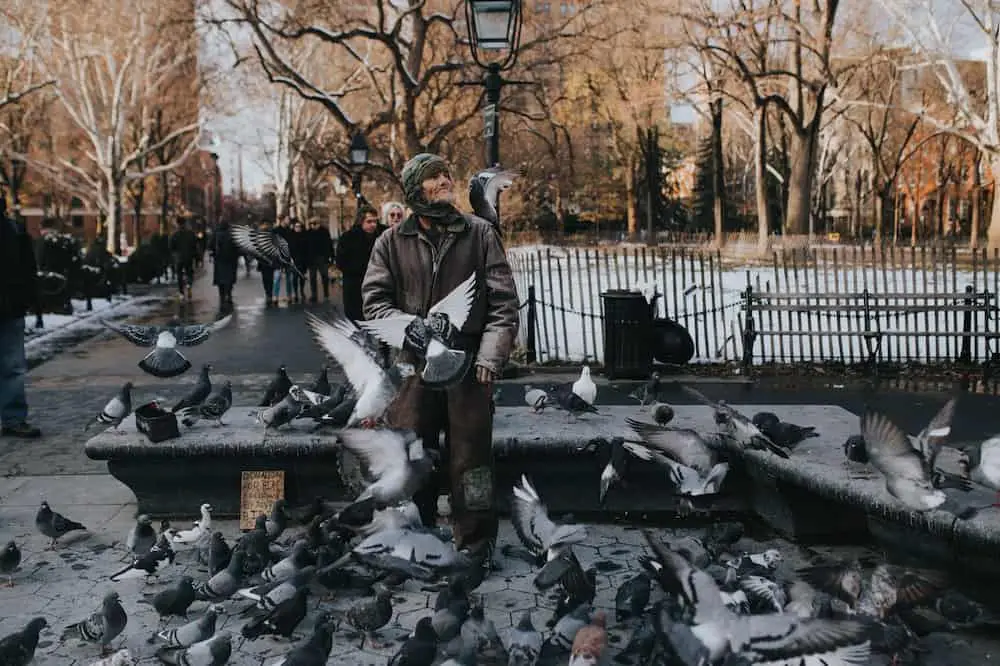
In literature, an object with human characteristics is called ‘personification‘.
Granting an animal human-like characteristics is called ‘anthropomorphism‘. (Anthropo = human being, as in ‘anthropology’. ‘Morph’ = change.)
Both personification and anthropomorphism are types of metaphors.
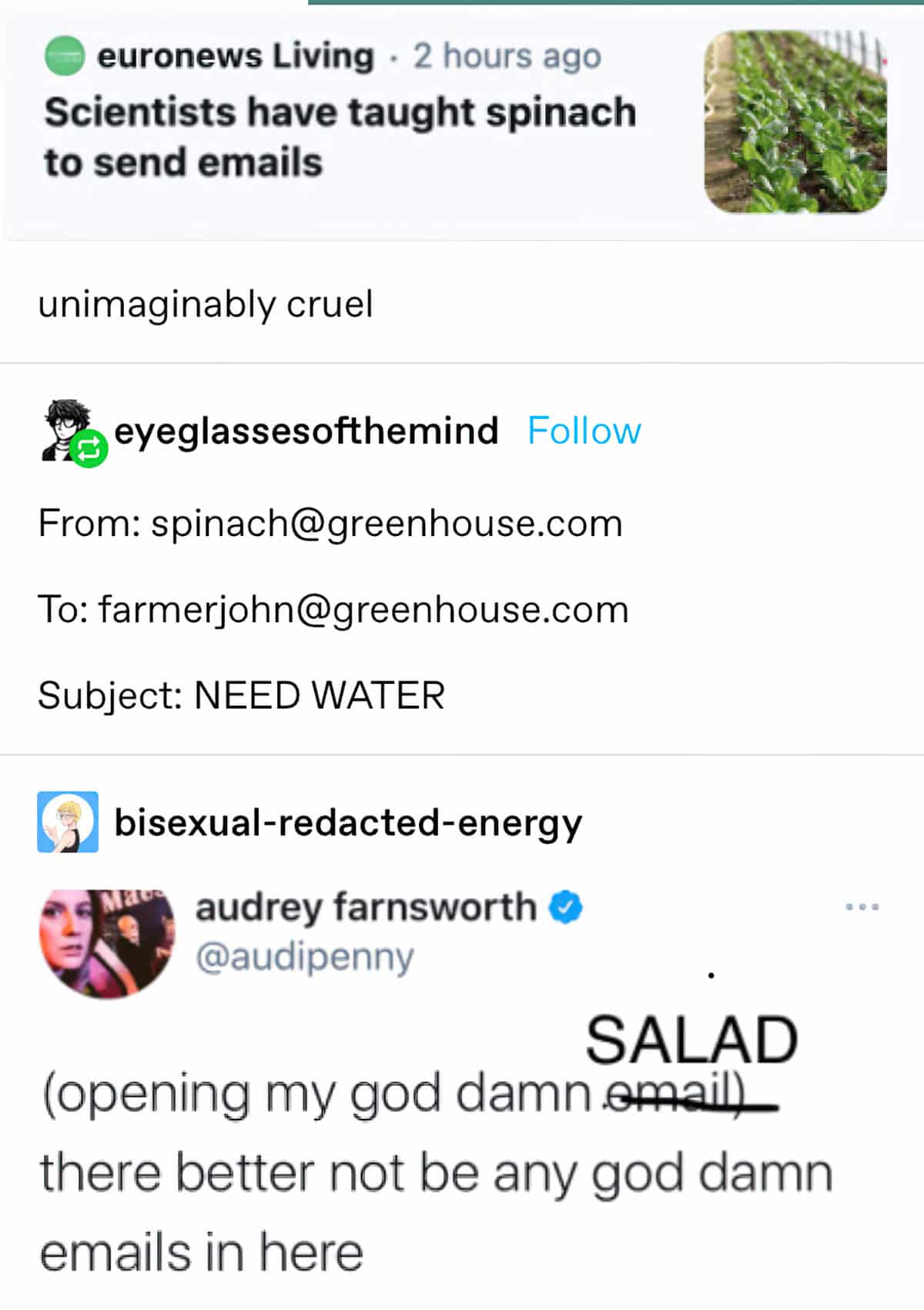

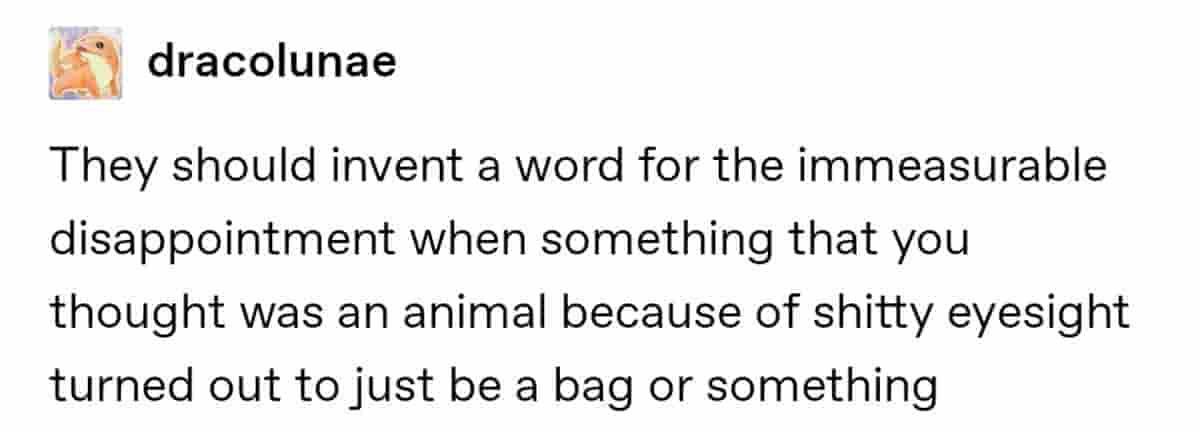
But what do you call it when it’s the other way round? i.e., when a human being is compared to an animal by virtue of animal characteristics? Reverse personification? Animalification?
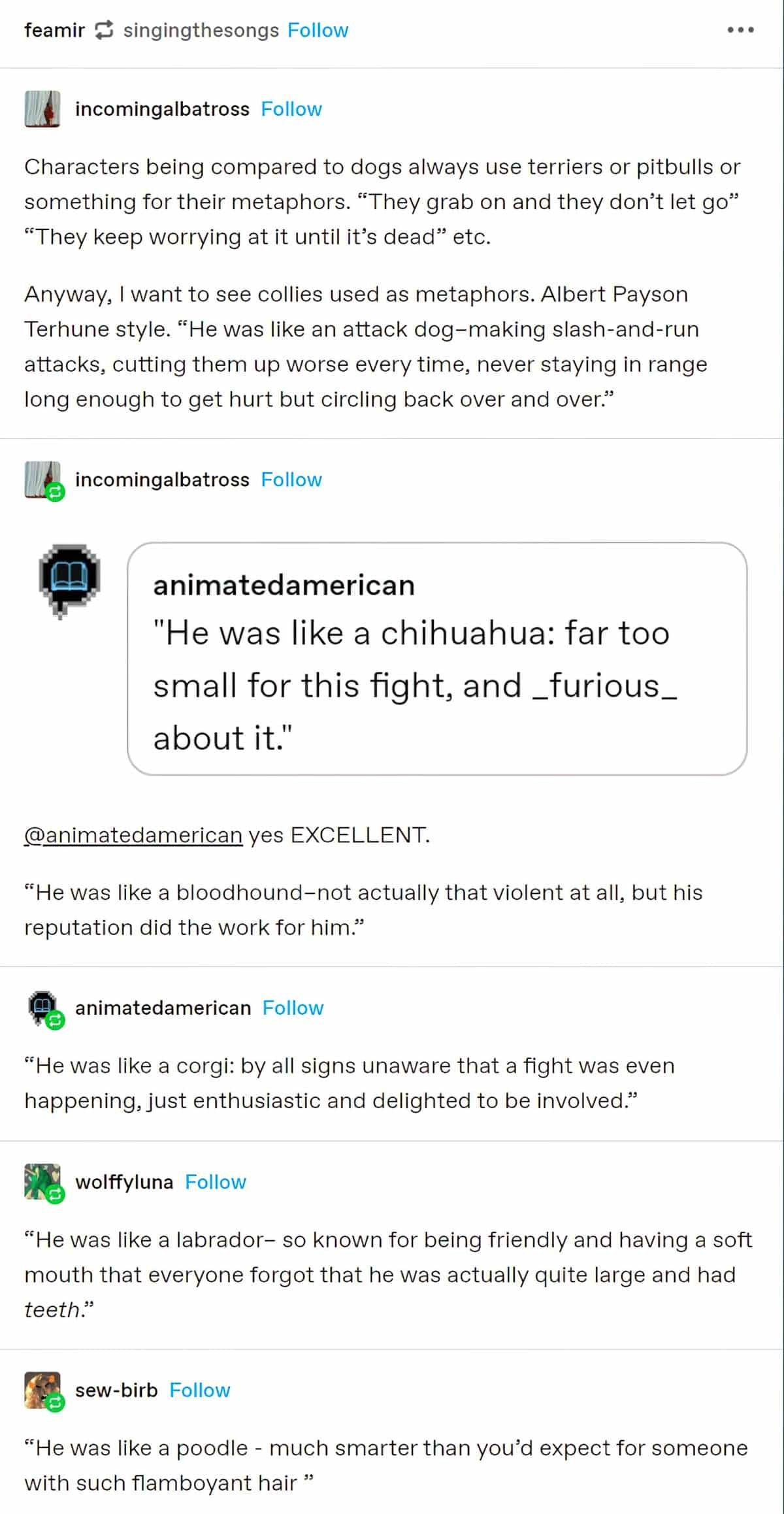
ANIMALISATION AS DEHUMANISATION
Humans will humanize anything—except, of course, for humans you don’t like.
– strange pilgrims, regrettably a good omens fic, by me(sousverre)
Sociologists do use a similar word to this: animalisation. For example, when humans are animalised, they are not afforded the trust, grace and care we would expect to see extended to a fellow human being. In an article about medical gaslighting, and how women are not believed when they express pain, I came across this sentence:
Studies have shown that women of color are more disproportionately affected by such dismissals of their pain—it is easier to animalize a woman of color and call her hysterical and sexualize her.
The Pain Gap: Gender Bias in Endometriosis Pain Management at Ms Magazine
Comparing humans to animals is one main way to dehumanize another person. Another main way: Comparing them to robots or automata. Dehumanize another person based on their ‘human’ traits or on their so-called lack of ‘human’ emotion.
(For more on that, see a 2012 paper called Intergroup bias toward “Group X”: Evidence of prejudice, dehumanization, avoidance, and discrimination against asexuals by McInnis-Hodson.)
Of course, humans have not always considered themselves separate from the animal kingdom.
For millennia, across a huge area of the earth, certain qualities were of great importance, and … those qualities were associated with women. The qualities are fertility, regeneration, and a sense of humans as integrally connected with nature, whether because they had the same qualities as certain animals or because they wished to have them. What is important to my argument is that although humans were exerting control over nature, they did not see themselves as separate from it. The goddess or principle of fertility or regeneration or vegetation was part of nature and worked from within it. The sacred was still immanent in the world and the flesh, in the creatures of earth and its plants, in human birth and death. Minoan culture lasted from about 3000 B.C.E. to about 1500 B.C.E., when it was destroyed, presumably by the consequences of a volcanic eruption on Thera (Santorin).
Beyond Power: On Women, Men & Morals by Marilyn French p27
THE 10 STAGES OF GENOCIDE
- Classification – The differences between people are not respected. There’s a division of ‘us’ and ‘them’ which can be carried out using stereotypes, or excluding people who are perceived to be different.
- Symbolisation – This is a visual manifestation of hatred. Jews in Nazi Europe were forced to wear yellow stars to show that they were ‘different’.
- Discrimination – The dominant group denies civil rights or even citizenship to identified groups. The 1935 Nuremberg Laws stripped Jews of their German citizenship, made it illegal for them to do many jobs or to marry German non-Jews.
- Dehumanisation – Those perceived as ‘different’ are treated with no form of human rights or personal dignity. During the Genocide against the Tutsi in Rwanda, Tutsis were referred to as ‘cockroaches’; the Nazis referred to Jews as ‘vermin’.
- Organisation – Genocides are always planned. Regimes of hatred often train those who go on to carry out the destruction of a people.
- Polarisation – Propaganda begins to be spread by hate groups. The Nazis used the newspaper Der Stürmer to spread and incite messages of hate about Jewish people.
- Preparation – Perpetrators plan the genocide. They often use euphemisms such as the Nazis’ phrase ‘The Final Solution’ to cloak their intentions. They create fear of the victim group, building up armies and weapons.
- Persecution – Victims are identified because of their ethnicity or religion and death lists are drawn up. People are sometimes segregated into ghettos, deported or starved and property is often expropriated. Genocidal massacres begin.
- Extermination – The hate group murders their identified victims in a deliberate and systematic campaign of violence. Millions of lives have been destroyed or changed beyond recognition through genocide.
- Denial – The perpetrators or later generations deny the existence of any crime.
THE ANIMALISATION OF WOMEN
But when the change happened, once men started to see themselves separate from animals, it really was only men who were afforded that distinction. French notes that things changed for women after the invention of the plow. Males took over formerly female activity, leading to far greater yields, in turn leading to rapid population growth and interpersonal conflict.
It may be that the discovery of the male role in procreation was the triggering event that brought together isolated or divergent elements into a new ‘philosophy,’ a new way of perceiving experience. For millennia men had felt marginal to the miraculous business of generation, and to the social and economic life that arose from it — the care and feeding of the group. Suddenly they were aware that in fact they were part of the process. It may even have seemed that they caused it, since no one could see the active physiological processes occurring within women’s bodies. Men planted the seed: who knew that it took two seeds to make a baby? Women were indeed closer to nature than men; they were like the earth — rich, fertile, but empty unless a seed took root in it. Men could control procreation without the burden of carrying a fetus inside their bodies, the danger and pain of giving birth, the continual bond to a nursing infant.
Beyond Power: On Women, Men & Morals by Marilyn French p46
Marilyn French hypothesises that patriarchal dominance over women emerged with the concept of the exercise of control.
It seems likely … that the new value was established slowly and shakily; possibly a small group of men held it as their secret, a mystery/hunting-cult god of power. Adherents of the new god would have defined themselves in the god’s image: that is, they would have identified themselves with their deity, as beings separate from and with control over nature. In addition, the idea of control is contagious: if a person is interested in power without reference to any other value, he or she will be able to gain power relatively easily over those who are not interested in it. […] Because women had for millennia been associated with nature, had been seen as having special relation with it to which men were marginal, the new value gave men a centrality and power they had lacked. In addition, since the new god was transcendent, having power over nature without being touched by it, those who worshipped him claimed the same position: as their deity had power over the earth, men had power over creatures of the earth, animals and women.
Beyond Power: On Women, Men & Morals by Marilyn French p51
By the time Greek Philosopher Plato came along, in the early 400s B.C.E., women were firmly established as closer to animals and the earth than were men.
In the Symposium, Plato’s hierarchy of virtue and rationality places women midway between men and beasts; Socrates specifically compares symbolic fatherhood — homosexual love between men, the creation of thought, poetry and law — to biological fatherhood and asks, ‘Who would not prefer such fatherhood to merely human propagation?’ The association of women with non-volition — necessity — and nature persists in Western thought. Both Hegel and Marx view childbearing as a nonvolitional activity and, moreover, one that precludes women from thinking about their experience.
Beyond Power: On Women, Men & Morals by Marilyn French p59
The new male self-definition [as patriarchs] excluded women: men were seen as fully human, ‘man,’ whereas women were seen as mediators between the human and some other power — usually nature. But to be human is not a ‘natural’ identity: it must be earned, learned, achieved, striven for. This division between human and semi-human existence, between men and women, pervades the thinking of many societies, both simple and complex. On the one hand, the division of the sexes on the basis of control grants men greater power than women. But since men must work to achieve that power, and women, being close to nature, have innate powers, men in many cultures feel jealous of women. Because the relation between the sexes is not one of equality but of domination, men cannot trust women, but believe the inferior sex is continually attempting to undermine them. Such lack of trust is inherent in any relationship based upon inequality. The power of women is therefore seen as malevolent, and it is centered in menstruation. It is not just in Judaism that men are warned to shun a menstruation woman.
Beyond Power: On Women, Men & Morals by Marilyn French p63
Semonides of Amorgos wrote a long misogynistic diatribe against women, claiming they were mere animals; Euripides, the one Greek playwright considered sympathetic to women, wrote, ‘Woman is a more terrible thing than the violence of the raging sea, than the force of torrents, than the sweeping breath of fire.’ Such attacks must be considered in the context of a culture in which women were secluded within the household or harem, excluded from all participation in city-state affairs, could not control their own property, and were little better than slaves.
Beyond Power: On Women, Men & Morals by Marilyn French p89
Both sexes may, with good reason, have desired to transcend and control the natural world. The raw state of the human in nature is not always aesthetically pleasing, comfortable, or secure. But the way the ideology of patriarchy divided responsibility and reward permitted men (more than women), permits them still, to maintain the delusion that they are not as tied to necessity and nature as women and other animals.
Because belief that a person or a sex is not bound by nature and necesssity is patently false, maintenance of such a belief depends on continual denial of actuality, and substitutions of symbolic formulas for actuality. Denial often takes the form of ignoring or toughening oneself to the needs of the body and affectionate emotions. The thought of the West ignores the fact that pride, arrogance, and an extreme drive to power are rooted in emotion.
Beyond Power: On Women, Men & Morals by Marilyn French p92
Marilyn French goes on to say that denial of nature in men takes two main forms. Most of us are very familiar with the first one: Suppression of emotions. Toughness.
The other is less talked about: ascetism. Whereas toughness is associated with the military and similar organisations, and requires association with women to prove anti-gayness, ascetism requires a man finds all women repugnant. Think monks and other holy men.
Many forms of control over both [human nature and environment] have been invented in the millennia since the assertion was made that men are higher than other animals], but each causes new problems, and the totality of these controls now threatens human survival.
It has, however, always been obvious to anyone who examined the proposition that humans lack control over their lives. What was contrived to conceal this fact was a symbolic formula: women were of a different species than men and were, by virtue of their biology, connected with the realm of the necessary. Men might need food, a bath, warm clothes, but these items were the responsibility of women. Men might sweat, fall ill, need to excrete, but these states were ignored: men’s proper sphere was the use of power — of mind, of ‘spirit’, and of body (prowess or arms).
Women, then, were a mediating link between men and necessity, men and nature, men and the intolerable other. Human vulnerability, failure in control, surrender in sensation and emotion were projected onto women alone (for the most part). Women’s behaviour, regardless of its character, was interpreted as displaying these ‘weaknesses’, while men’s behavior, when similar, was either ignored or interpreted differently. Women were defined by those traits men wished not to possess. This splitting of human experience into gender roles, however, made women even more necessary to men.
Beyond Power: On Women, Men & Morals by Marilyn French p96
French wrote mainly about men and women, but whatever she says about the power dynamic between men and women also applies to other power dynamics, especially that between white people and Black people.
Stratification creates levels of superiority and inferiority — an elite that is fully human, while other groups are less so (or even more extremely, an elite that is in touch with the divine, while others are merely human and subhuman) — and the idea of superiority is sometimes fostered in fragmented groups to maintain a divided population. … The terms used to divide populations or cast contempt on certain kinds of men are predictable: they resemble the terms used to lay scorn upon women, and associate men with the animal (e.g., ‘big black buck’) and with sexual depravity (‘mother fvcker’).
The great threat is still nature, seen as a swamp into which men slide when they forget to maintain control. As Darwin put it in The Descent of Man, ‘Man still bears in his bodily frame the indelible stamp of his lowly origin’. That lowly origin was the animal ancestry; thus throughout European history despised groups such as Jews and gay men were continually characterized as animals.
Beyond Power: On Women, Men & Morals by Marilyn French p101
Whenever a person or group of people are compared to animals in literature, there will be a reason for it: either to maintain power hierarchies or (let’s hope) in order to critique power hierarchies.
For more on these ideas, Sherry Ortner published a seminal essay in 1974 called: Is Female to Male as Nature Is to Culture? (It’s about 20 pages long.)
So, this explains why women feel shame around bodily functions, even those functions which are shared by men (farting, pooing). Australian ABC podcast “The Hook Up” aired an episode called “Normalise girls doing poos“, inspired by an Aussie musician duo whose song about girls doing poo at their boyfriend’s house went viral on TikTok in 2022.
I have to do a poo at my boyfriend's house
And maybe he won't know if I'm quiet as a mouse
I have to do a poo at my boyfriend's house
He doesn't think I fart but I do and they're loud
I have to do a poo at my friend's new flat
Dinner was good but I have to pass that
I have to do a poo at my one night stand
Poo real quick and as fast as you can
Normalize normalize normalize normalize girls doing poo...

After talking to a number of people, "The Hook Up" presenters realised that while people of all genders feel poo-shy (about 30% overall), those socialised as women feel shame as well as shyness, which should be considered two separate things. Shyness is about a situation; shame is about who you are.
There are no doubt many reasons for why women feel shame around bodily functions, but it’s not outside the realm of possibility that the reason includes a more tenuous hold on human status. Men and boys (especially teenage boys) are regularly the butt of jokes about foul smell and body odour, so it might be tempting — on the surface — to assume men are actually the ones more regularly compared to animals. Scrape below the surface and into the history of women’s status and the reverse is patently true: Men are afforded the privilege of revelling in very human bodily functions because men are not, as a gender, for the past 3000 years, been animalised. (Certainly, Black men have been, by white patriarchy.)
Marilyn French was writing about feminism in the mid 1980s. But what do contemporary feminists have to say about this phenomenon? In Entitled (2020), feminist philosopher Kate Manne reminds us that humans are a type of animal by making use of the phrase ‘non-human animals’. Unfortunately, the dehumanisation of women continues into the present, but Dr Manne has a caveat. Just as she argued in Down Girl (2018) that misogyny does not equal a simple ‘hatred of women’ but rather describes the police force which keeps the patriarchy ticking over, in her subsequent book she argues that it is simplistic to say that women are seen as less than human. In fact she argues the inverse: That women are seen as all too human and that is the problem:
Why do incels sometimes resort to such dehumanizing and objectifying language in speaking about women — for instance, by calling women “femoids” (or “foids,” for short)? As we have seen, it’s not because they believe women are literally nonhuman animals, mere sexual objects, robots, or similar. There is a simple alternative explanation: it is an expression of rage and the resulting desire to put women down. Incels are passionately invested in social hierarchies, including one that resembles the great chain of being, with god at the top, non-human animals at the bottom, and various ranks of human beings positioned in between them. So implying that a woman is something nonhuman may serve as the ultimate insult. But her supposed moral crime is a human, all too human, violation — the kind of act only human beings can commit — as is her proposed punishment. Nonhuman animals do not betray their owners, though they may disappoint them. And people typically don’t take revenge on nonhuman animals either. When they do, there is something conceptually awry, as opposed to simply ethically wrong, about the whole enterprise. That is the Cliffs Notes lesson of Moby-Dick, I take it.
Entitled, Kate Manne (2020)
SEE ALSO
Can You Learn to Meow Like Your Cat? Yes and No, According to an Animal Behavioralist from Inverse
ZOOMORPHISM
Turns out the word for ‘reverse anthropomorphism’ is zoomorphism. But because this word isn’t used much, people make up their own terminology, independently of one another.
Someone on Urban Dictionary noted the words fantasy lovers have come up with:
ANTHRO
An animal with human-like characteristics. A human with animal-like characteristics can also be called an anthro, but technically they are not. An anthro is, technically, an animal that can: a) walk upright, b) talk, or talk somewhat (AKA has human vocal chords), c) has human features (i.e. a centaur, half human, half horse), d) has the bone structure of a human, with some of its animal counterpart (i.e. a cat-anthro that although looks like a human, can jump like a cat). These characteristics separate anthros from humans with cat ears and tail (or something like that).
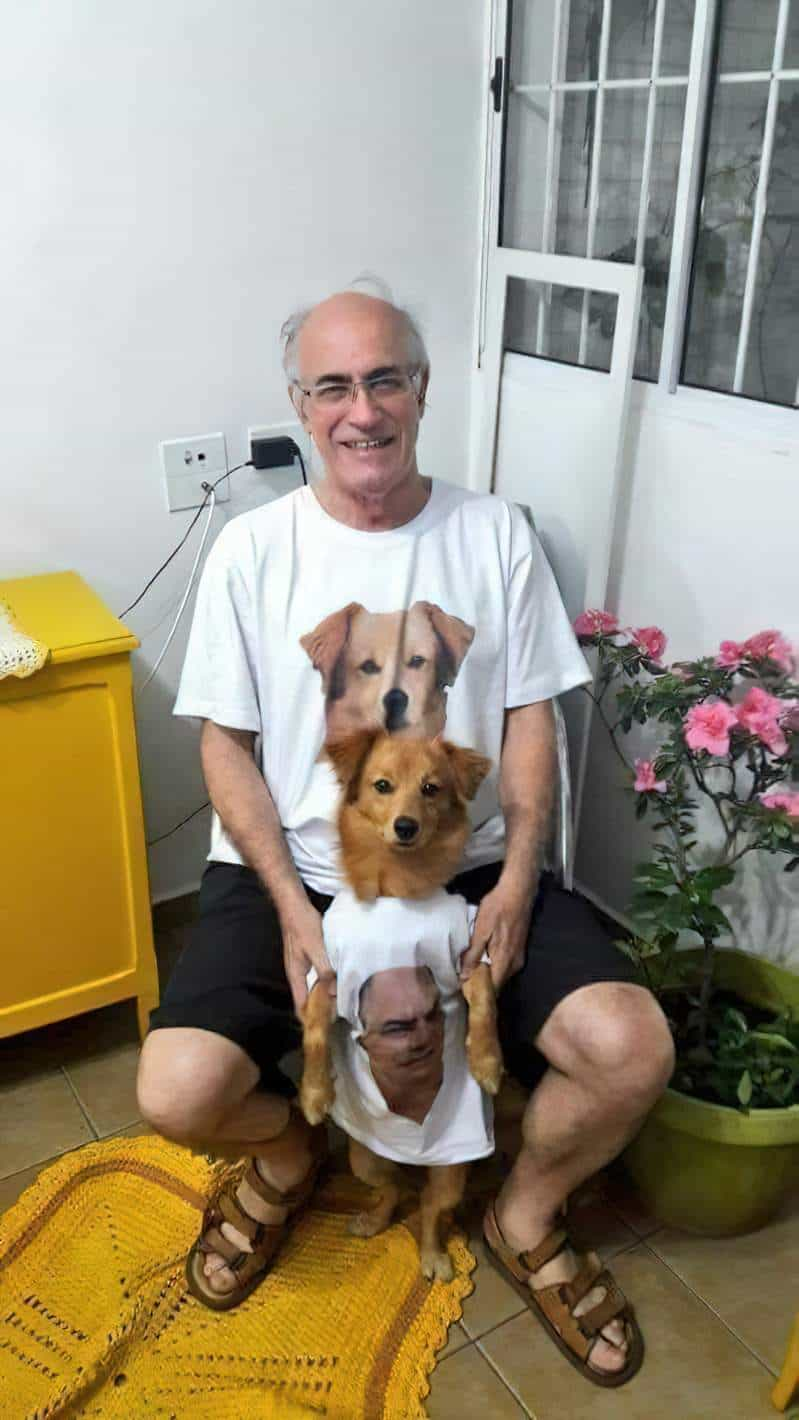
EXAMPLES OF ZOOMORPHISM
It’s common in literature to give a human character animal characteristics, even when the genre is not speculative.
We are used to animal idioms in daily life e.g.
- picky eaters as birds
- greedy people as pigs
- thin people as stick insects
- night owls
In literature, the metaphor may last the length of a work, leading readers towards the conclusion, or it may be short-lived e.g. a single observation.
A lengthy example of zoomorphism: In S.E. Hinton’s That Was Then, This Is Now, one of the main characters is depicted as a lion in preparation for his eventual fate.
A singular instance of zoomorphism: ‘I love your dress,’ she purred. (Women as cats and birds is cliche in literature.)
As children we get used to picture books where the people are ostensibly animals — they have the heads and bodies of animals but essentially behave like humans. Often there’s no metaphorical reason for this — it’s the ‘hat on a dog’ type humour that children love. Why is Olivia a pig? I have no idea, but it gives Ian Falconer’s illustrations a childlike interest which may not otherwise be there given his limited colour palette and style.
Authors of adult work also make use of people as animals, and can continue animal metaphors across an entire story. It might be limited to a character sketch. Alternatively, character-as-animal may comprise the beef of the story and function as integral to the plot.
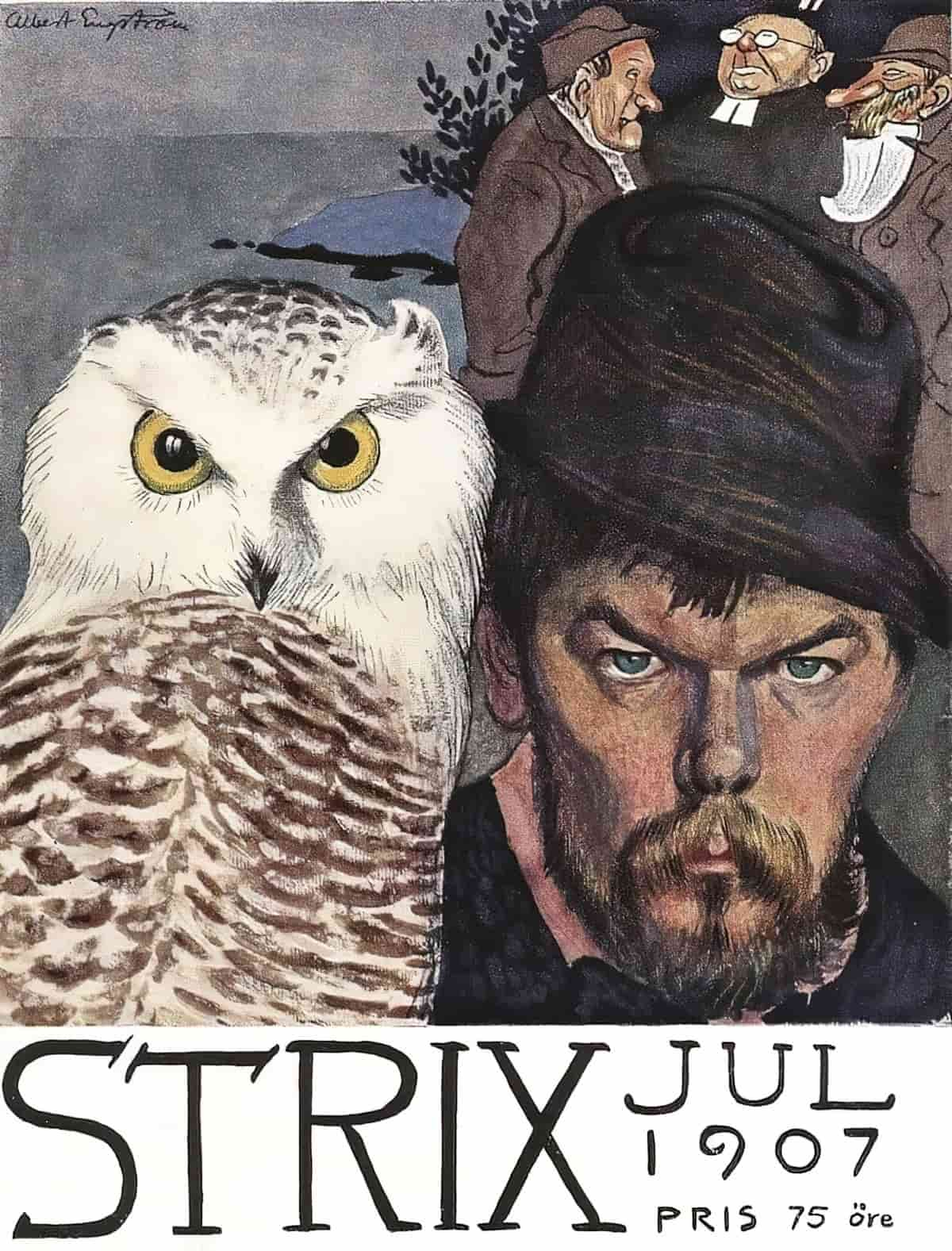
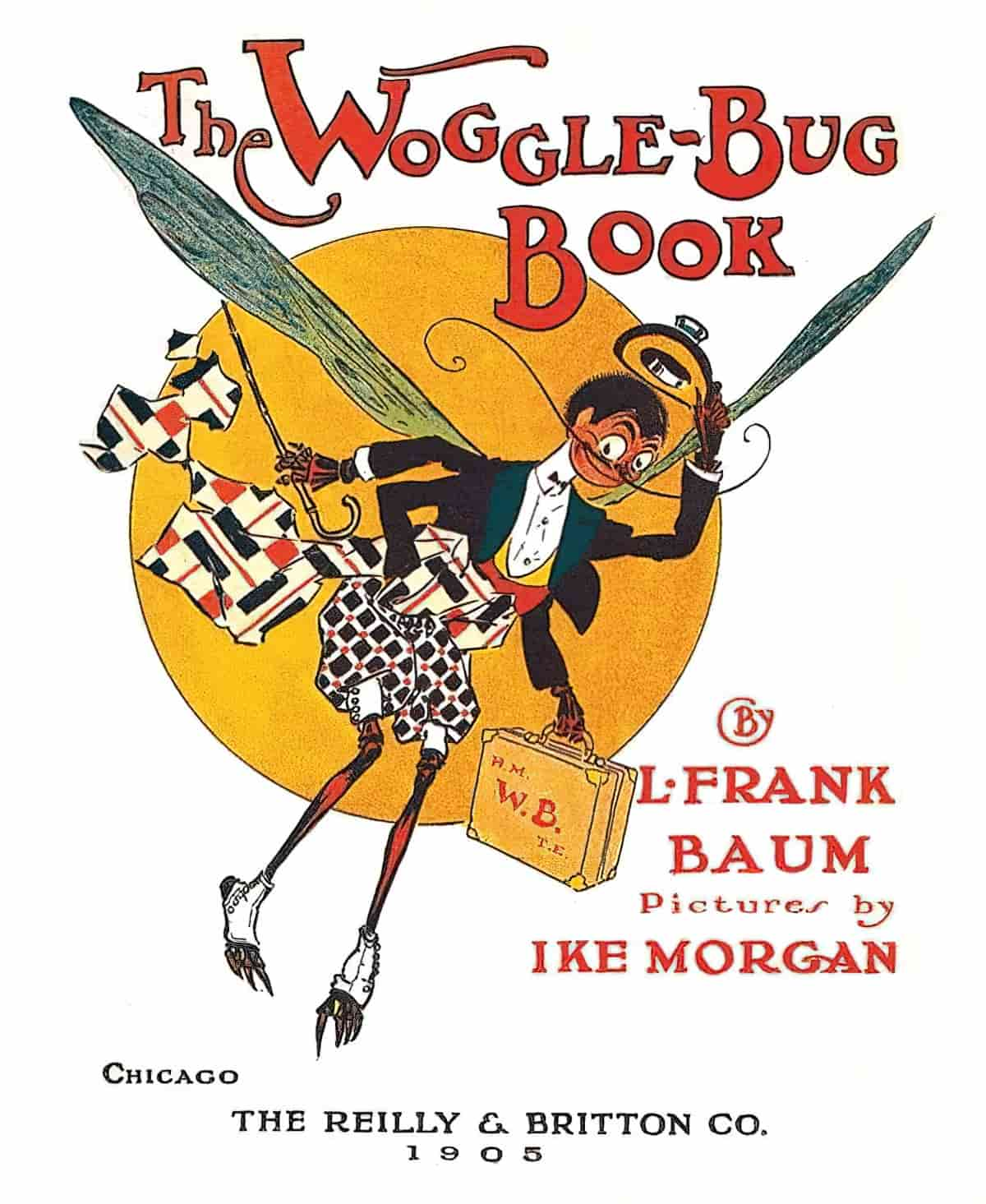
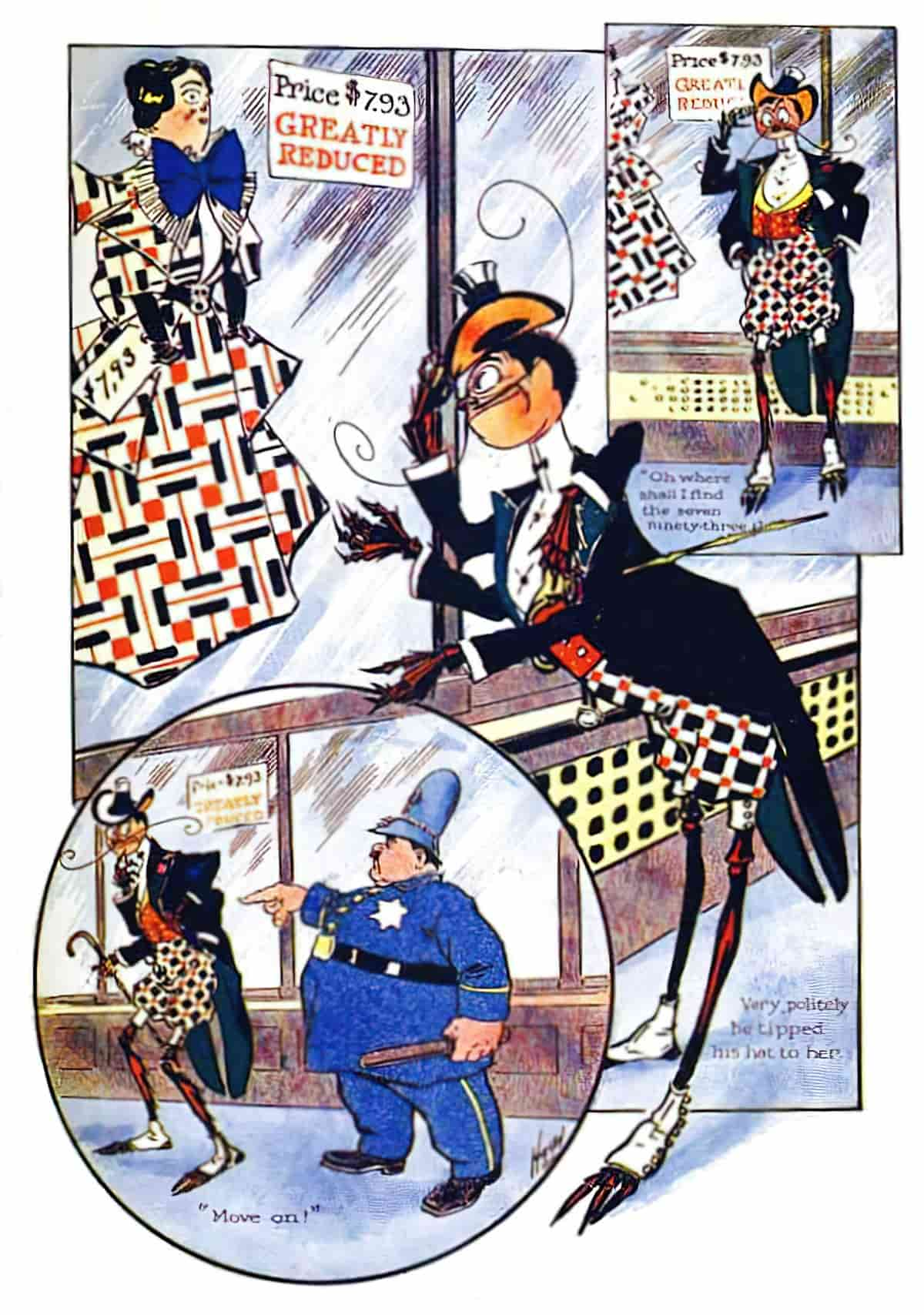
The following examples persist throughout the story and are integral to the story as a whole:
- “The Ratcatcher” by Roald Dahl (short story)
- Caleb by Gary Crew and Steven Woolman (horror picture book)
- Mercy Watson Thinks Like A Pig — ironically it is the Animal Catcher who thinks like a pig. Here we have a double layer of animalification, because Francine Poulet is also described as a chicken (the big clue is in her symbolic name).
- Mercy Watson Fights Crime — Kate diCamillo and Chris Van Dusen do enjoy designing opponents with an animal in mind — in this one the cowboy-wannabe burglar is depicted as a weasel. (I know this from listening to Kate diCamillo talk about the character design in an interview — it’s not over-the-top obvious.)
- “Mr Reginald Peacock’s Day“, a short story by Katherine Mansfield takes the vanity symbolism of the peacock and applies it to a singing teacher.
EXPANDED EXAMPLE
OLDER WOMAN COMPARED TO GREY FIELD MOUSE
Roald Dahl uses a rat in “The Ratcatcher” but mice are considered really quite different from rats. Rats are sinister; mice are more often harmless, vulnerable due to their size, cute. The idiomatic expression ‘timid as a mouse’ doesn’t represent the reality of mice — whenever I’ve had them in the house I’ve been struck by how brazen they are.
Robin Black opens her short story “Tableau Vivant” with real mice, which have come into a house. She then focuses on one (actual) bolshy mouse who won’t leave the house even though it’s no longer winter. Next, we get a thumbnail sketch of the woman who lives in this house. The focus is on her physical resemblance:
Jean Kurek looked a bit like a field mouse herself, with her close-cut gray hair, in her shapeless gray dress—no zippers, no buttons. Stroke clothes. Her appearance was no more or less distinguished than it had been all her sixty-eight years, the most likely description of her a string of negatives. Not really tall or short, you wouldn’t say she’s heavy but she isn’t particularly thin, not ugly, not at all, but not pretty either, her hair is that color that isn’t blond or brown. Arguably, her most striking feature was the absence of any striking feature—though her hair had finally claimed a color, gray.
“Tableau Vivant” a short story by Robin Black from If I Loved You I Would Tell You This
But Black doesn’t stop at the physical resemblance:
Jean had spent a lifetime trying to be inconspicuous, appreciating that nature had given her a good start. As she stepped out from the kitchen now and crunched her way over the garden’s gravel pathways, even the briskness of her pace seemed designed to make her presence as little disruptive as possible, and the arm hanging loose by her side, like something she would soon remember to gather up. [She has lost the use of one arm due to a stroke.]
“Tableau Vivant” a short story by Robin Black from If I Loved You I Would Tell You This
Note that not every aspect of the human character needs to resemble the chosen animal. Mice don’t ‘crunch’ when they walk across gravel, for instance, but they do walk like that, just in their miniature way.
CHREMAMORPHISM
Whereas zoomorphism is the inverse of anthropomorphism, chremamorphism is the inverse of personification. Chremamorphism is the literary technique of comparing a person to an object in some way.
For example, an old man character might be compared to a rock or a chimney. A man might be compared to a flower.
A man lives as briefly as a flower, destined all too soon to decay into the stink of flesh. Humanity strives all its days to sear its own flesh in the flames of base desire.
THRONE OF BLOOD (Akira Kurosawa, 1957)
The song “Grandfather’s Clock” might be considered an example of chremamorphism and personification combined, because the old man and the clock are one and the same.
Thomas Hardy frequently compared his human characters to animals, or insects. In The Return of the Native there’s a scene in which Clym and Eustacia sleep inside the cottage in the summer heat. Thomas Hardy foreshadows this scene with images of wasps “rolling drunk with apple juice stupefied by its sweetness”.
What’s the effect? Oh yes, there’s always an effect. And if you’re writing an exam essay, make sure you explain the effect. Hardy is drawing a parallel between the laziness of the lovers and the insects. Both are isolated in a utopian space. Both lovers and insects are made calm by warmth and plenitude.
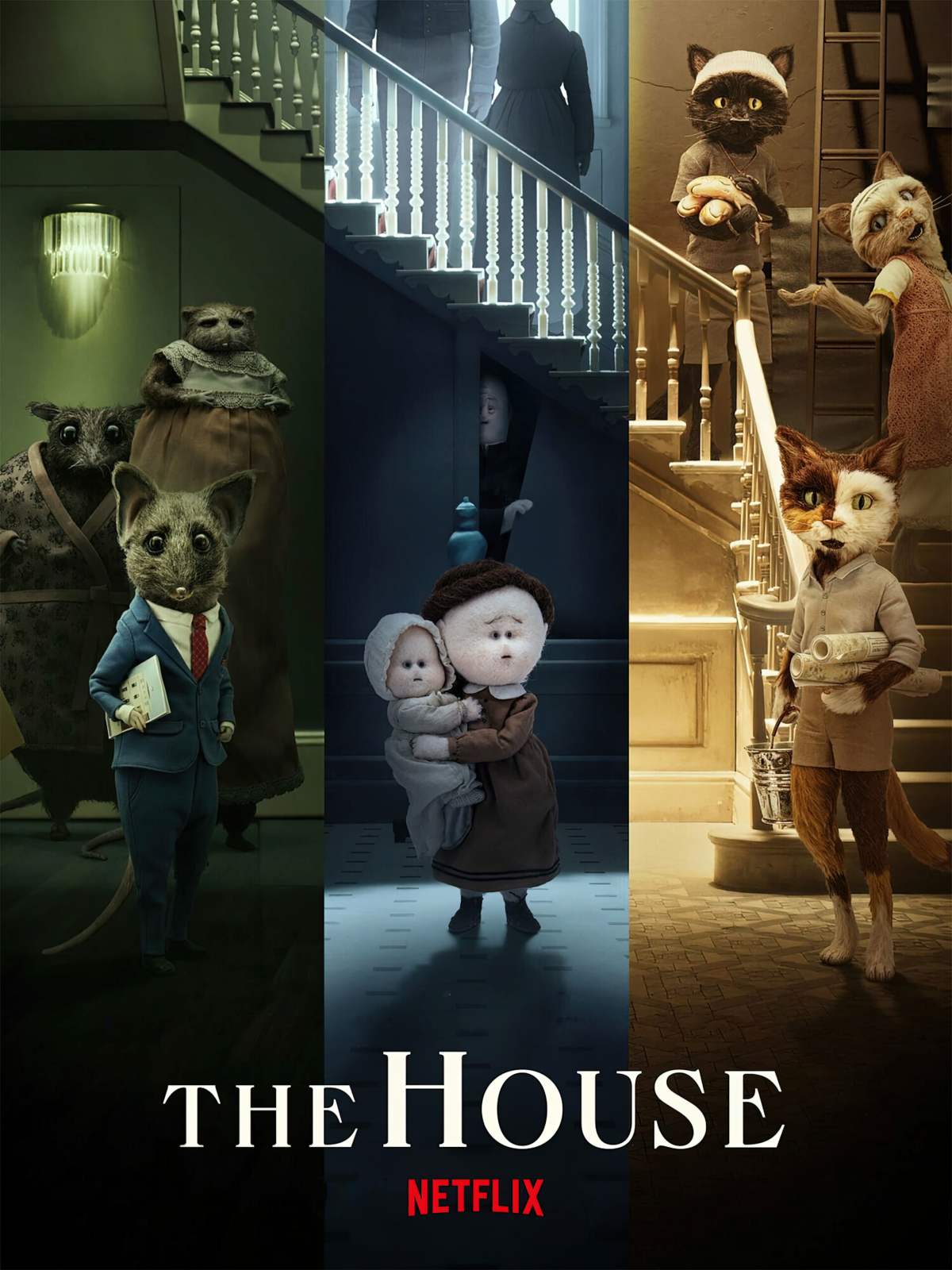
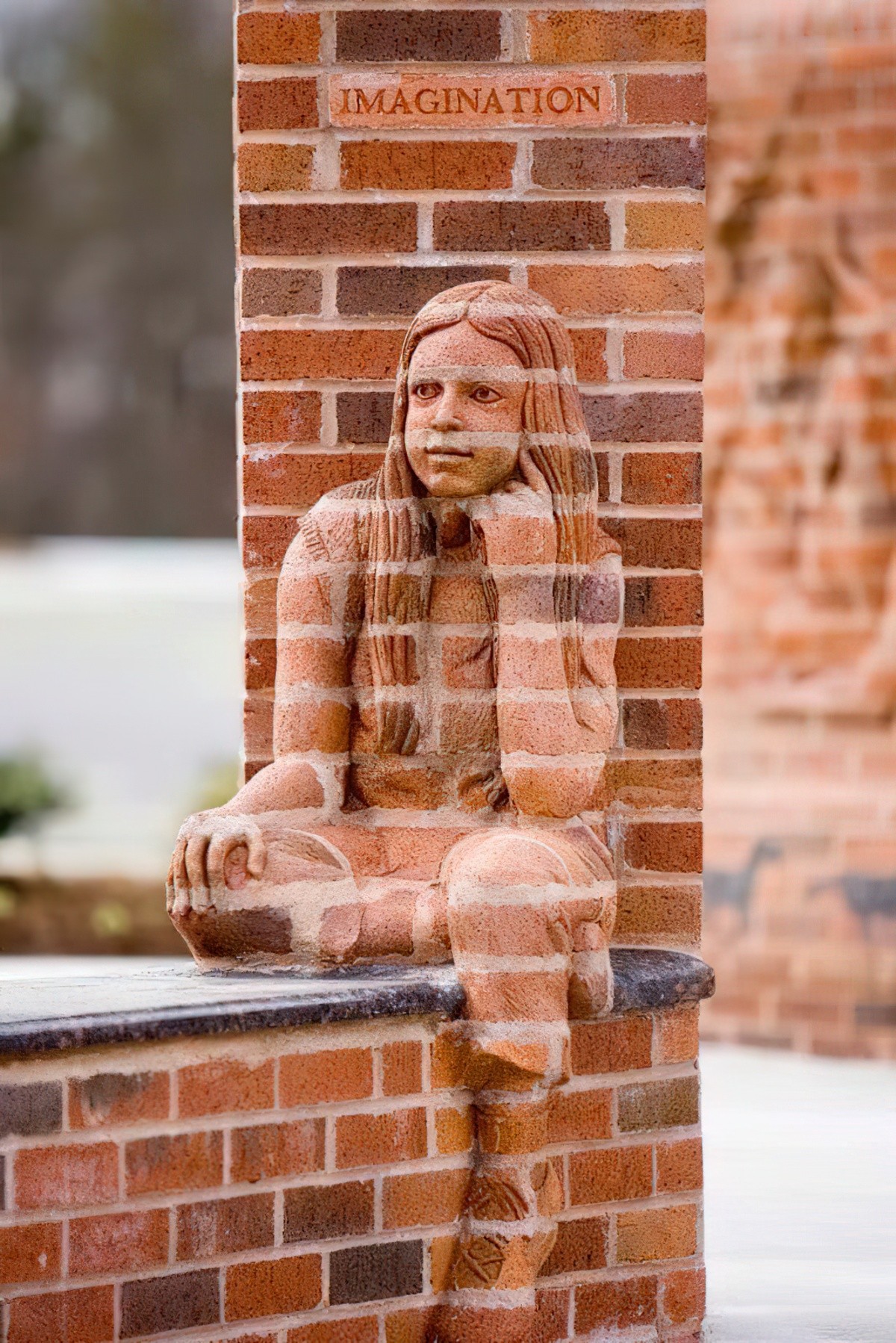
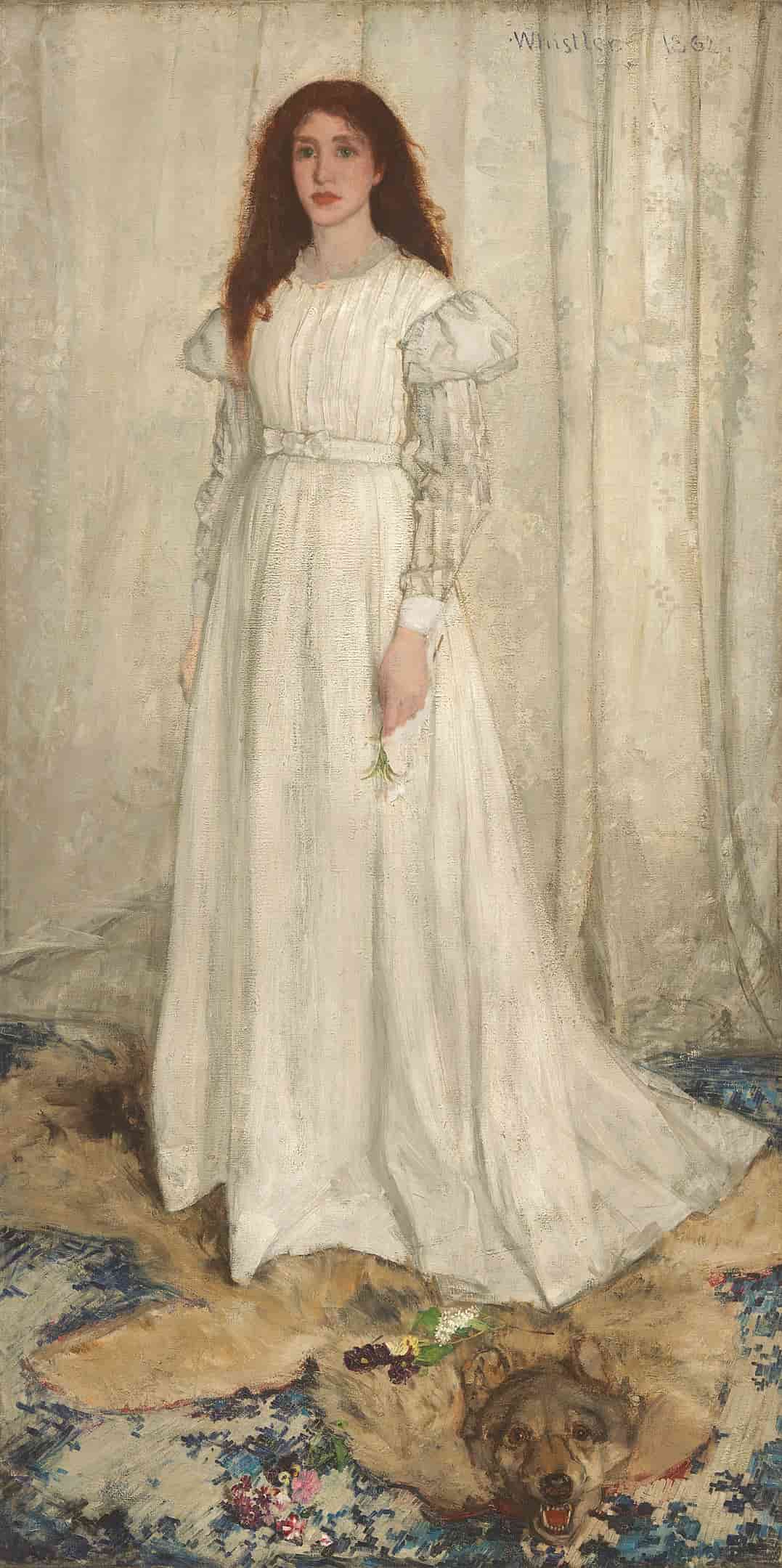
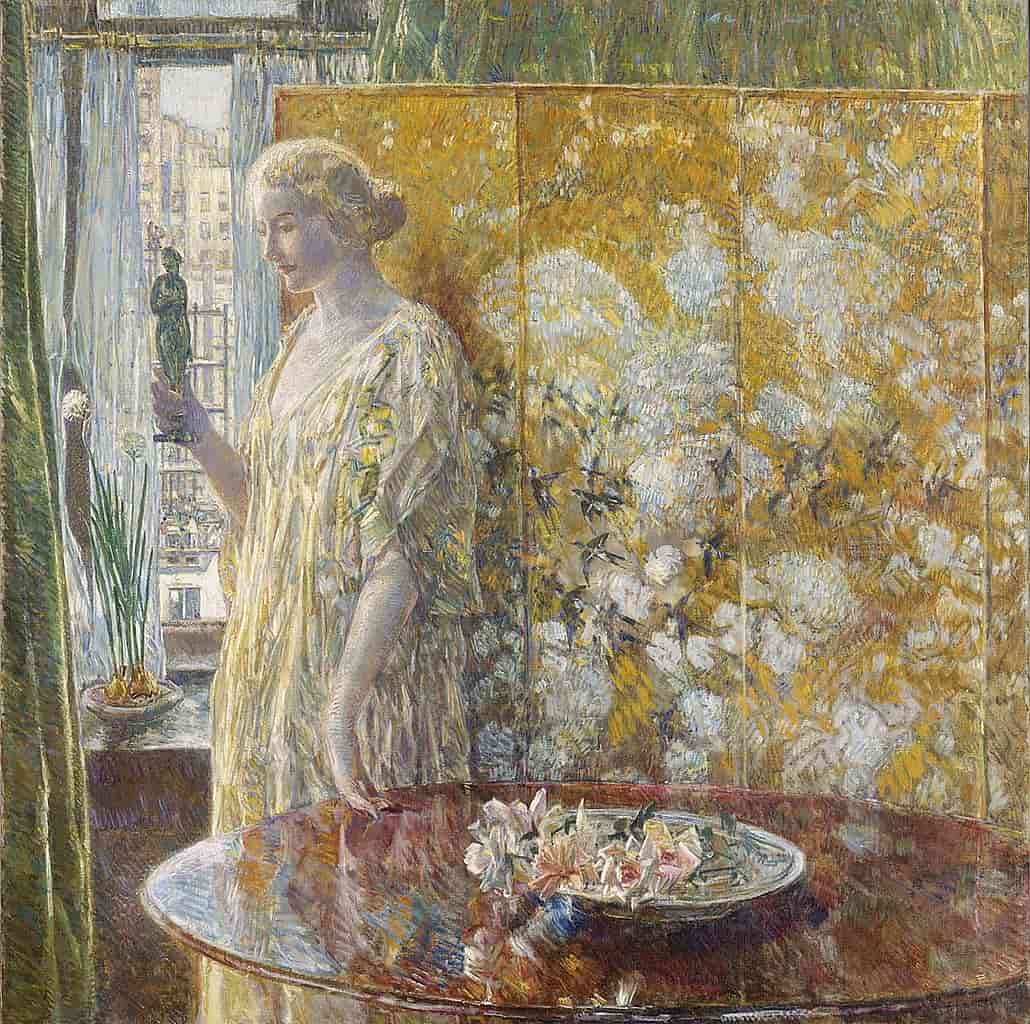
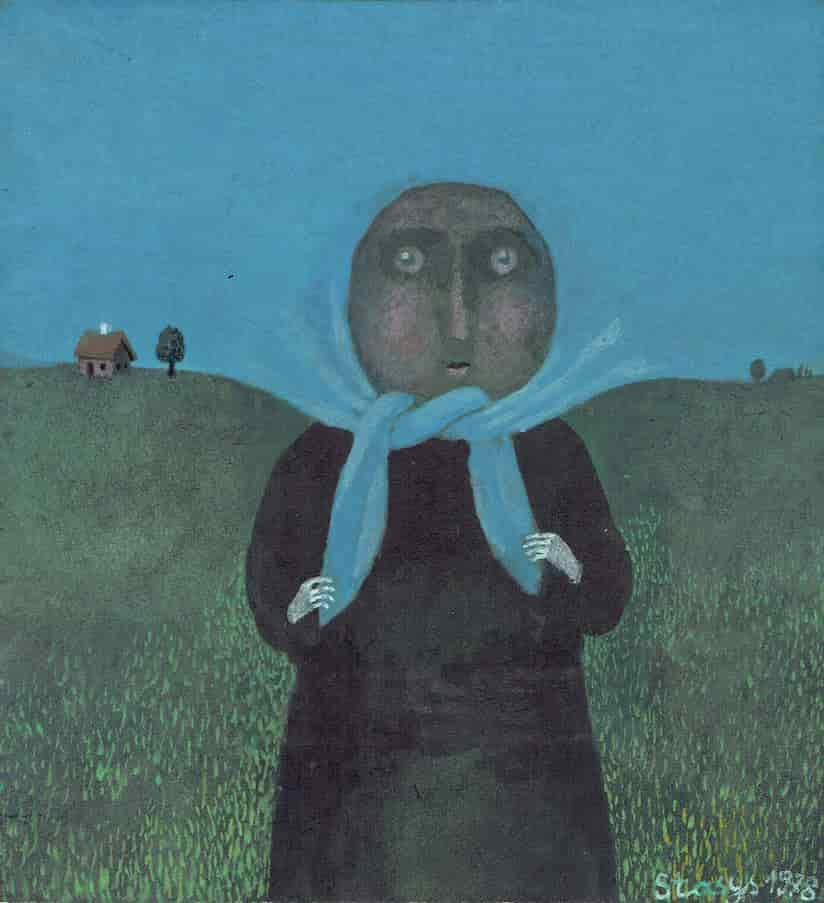
There’s a category of fine art in which women and girls blend into the background. They become one with their background, a kind of chremamorphism. Standout examples below.

I HAVE NO IDEA WHAT YOU CALL THIS
Plants which look like objects
Lithops are Namibian and South African plants that have evolved to look like stones.
Animals which look like… food?
Header photo by Caitlyn Wilson